

Nourish Calm, Not chaos
A Parent’s guide to
co-regulation
You just returned from a semi-successful trip to the mall—the store had the size you were looking for, but your kid lost their cool in the middle of an already stressful trip, and perhaps your cool quickly followed.
Don’t worry, we’ve all been there.
At School Care Team, our work centers around youth mental health and well-being, and this page is meant to give you some tips and tricks on how to best support your child (and yourself!) in those moments of high stress.
let’s talk about
CO-REGULATION
Co-regulation isn’t just a parenting technique, it’s how your child’s brain is designed to grow.
Every parent knows what it’s like to see their child overwhelmed—maybe by big feelings, a rough day, or just a spilled bowl of cereal. In those moments, your calm presence matters more than anything you say.
That’s co-regulation: the process of helping your child manage their emotions by staying connected and calm yourself. Through tone of voice, facial expression, and body language, you send powerful messages of safety that help your child’s nervous system settle down.
Emotions are contagious. If you want more peace in your home, don’t join the chaos, share your calm.
When kids are upset, their brains aren’t ready for logic. Lectures or punishments in the middle of a meltdown rarely work, and don’t teach long-term skills. What they need first is your calm presence. Why? Your calm tone and gentle face signal to your child’s brain: you’re safe.
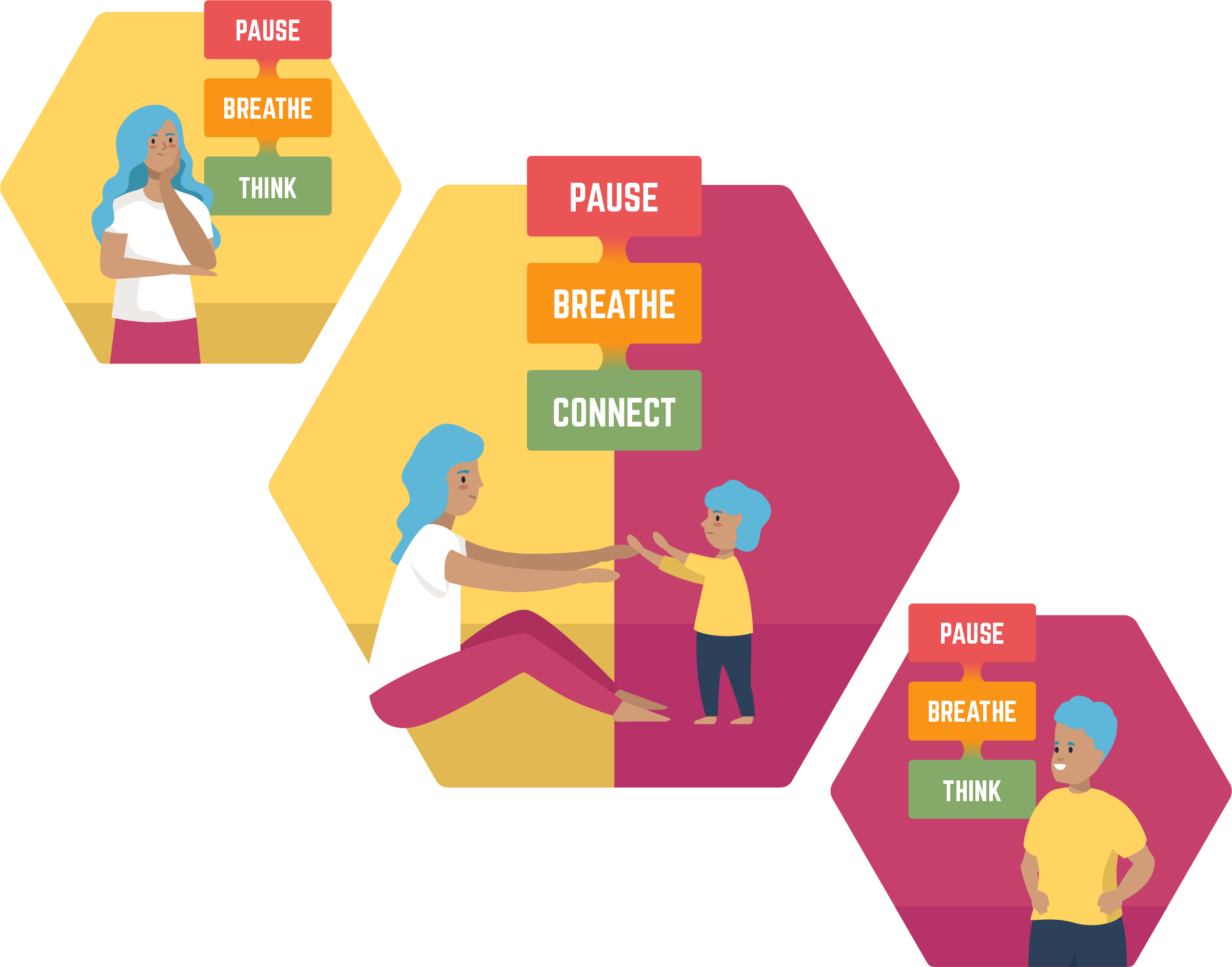
When your child feels safe, their stress hormones drop, and the part of the brain responsible for thinking and learning (the prefrontal cortex) can come back online. Your shared calm releases oxytocin which deepens connection and reduces anxiety. Over time, your child will learn to do this on their own—but for now, they need your help.
Co-Regulation is one of the most powerful parenting tools. When you slow down, connect and Help Your child find their calm, you’re wiring their brain for life long self-Regulation.
Responsive Training & Coaching for Schools
Feeling safe—both physically and emotionally—is critical for every student, educator, and administrator to thrive which is why our programs are strengths-based, presented through a lens of hope. We work closely with you to understand the current state, envision the ideal future, and develop a custom program on how to meet your unique objectives often focusing on mental health, suicide prevention, employability skills, and fostering meaningful connections.
From cutting-edge pilot programs like WRAP and Kimochis to parent workshops and teacher support, We prioritize student well-being, educator coaching and development, and healthy school community practices through responsive training and strategic coaching.
Student Empowerment
Equipping students with tools to navigate challenges and build confidence.
Teacher Support
Providing training and coaching to help educators create positive, effective learning environments.
Parent Engagement
Offering workshops and resources to strengthen family-school partnerships.
District-Wide Initiatives
Developing customized strategies for systemic change and sustainable impact with a focus on reducing violence and increasing attendance.
move this above and make this science of sour steps to Support
co-regulation
By blending compassion with boundaries, you offer both comfort and structure. This balance not only brings more harmony to your home, it helps your child build lifelong skills for navigating big emotions.
1. regulate Yourself first
Take a deep breath before responding. Your emotions and approach sets the tone.
2. Connect: Get on their level
Lower your body, soften your voice and make gentle eye contact. Offer a hug to support their feeling of safety.
3. BE CURIOUS: Let them talk
If your child feels heard they are more like to receive direction on how to do things differently next time.
4. SHOW EMPATHY
Use reflective language and acknowledge their feelings: “I see your really upset about this.”
5. offer a regulation activity
Encourage their calming practice through physical activity, intentional breathing, or even a quiet moment together.
The Power of SourTake a deep breath before responding. Your emotions and approach sets the tone.
2. Connect: Get on their level
Lower your body, soften your voice and make gentle eye contact. Offer a hug to support their feeling of safety.
3. BE CURIOUS: Let them talk
If your child feels heard they are more like to receive direction on how to do things differently next time.
4. SHOW EMPATHY
Use reflective language and acknowledge their feelings: “I see your really upset about this.”
5. offer a regulation activity
Encourage their calming practice through physical activity, intentional breathing, or even a quiet moment together.
science backed strategies to support our youth
About School Care Team
Thriving communities are built on individuals who feel valued and empowered to reach their highest potential. Through collaboration, practical solutions, and a commitment to positive change, we work to create spaces where mental health, academic achievement, and personal growth are priorities for all.