

CO-REGULATION
The Science & PrActice oF
finding calm together
Access the Spanish Booklet (folleto en español)
CO-REGULATION
It isn’t just a parenting technique, it’s how your child’s brain is designed to grow.
Every parent knows what it’s like to see their child overwhelmed—maybe by big feelings, a rough day, or just a spilled bowl of cereal. In those moments, your calm presence matters more than anything you say.
That’s co-regulation: the process of helping your child manage their emotions by staying connected and calm yourself. Through tone of voice, facial expression, and body language, you send powerful messages of safety that help your child’s nervous system settle down.
Emotions are contagious. Don’t join the chaos, share your calm.
When kids are upset, their brains aren’t ready for logic. Lectures or punishments in the middle of a meltdown rarely work. What they need first is your calm presence. Why? Your calm tone and gentle face signal to your child’s brain: you’re safe.
When your child feels safe, their stress hormones drop, and the part of the brain responsible for thinking and learning (the prefrontal cortex) can come back online. Your shared calm releases oxytocin, the bonding hormone that deepens connection and reduces anxiety.
Simply put: your calm changes their brain.
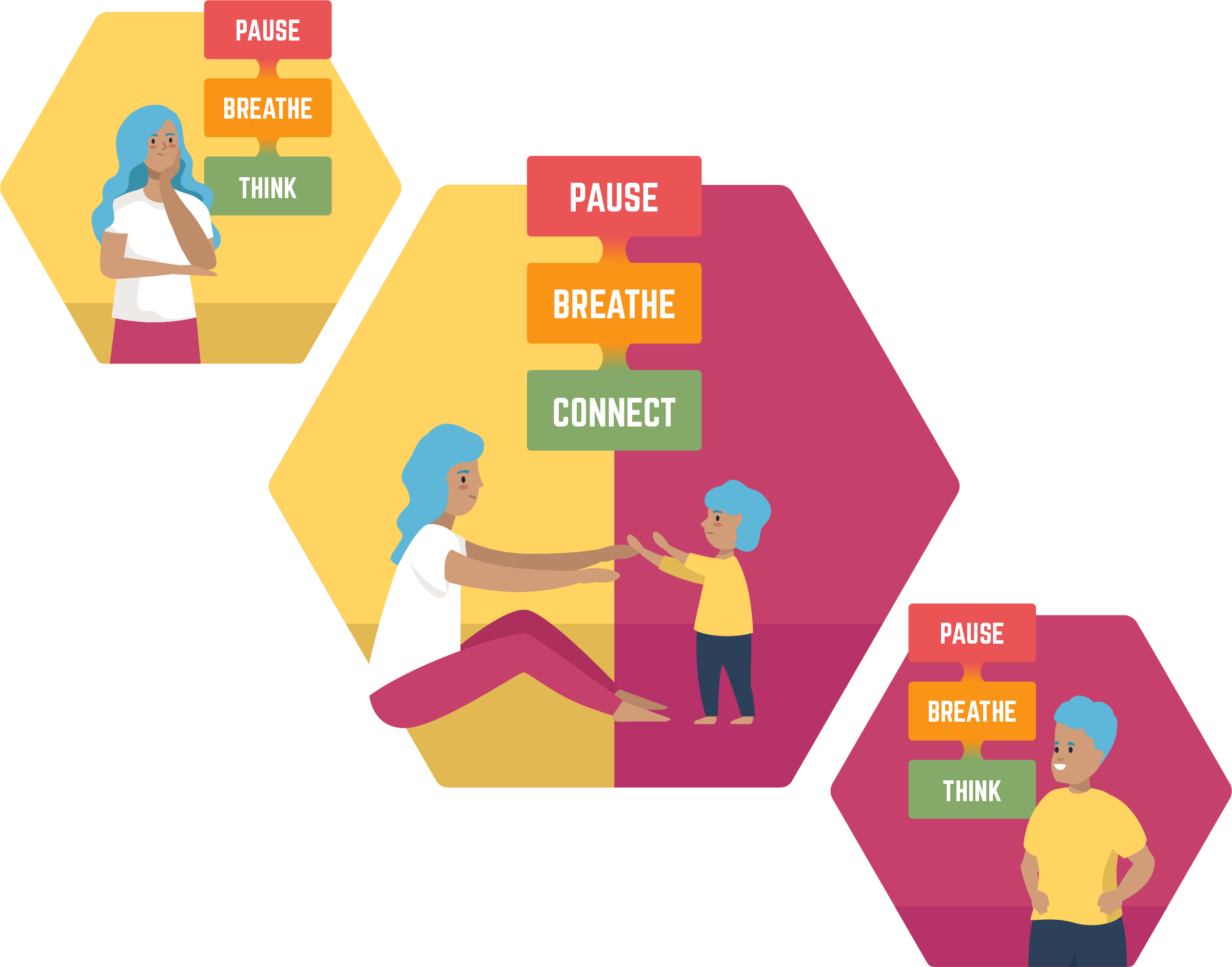
Self-regulation is your ability to manage emotions on your own—to pause, breathe, and think before reacting. This is an important part of creating safety for your child. By sharing your calm, co-regulation is possible. The back-and-forth emotional exchange between the two of you teaches your child’s brain to calm down. Over time, your child will learn to do this on their own.
Steps to support
co-Regulation
Feeling safe—both physically and emotionally—is critical for every child to process and learn. If their nervous system doesn’t feel safe, they will not be able to really hear and receive feedback. Co-regulation doesn’t replace discipline, it strengthens it.
By blending compassion with boundaries, you offer both comfort and structure. This balance not only brings more harmony to your home, it helps your child build lifelong skills for navigating big emotions.
1. regulate Yourself first
Take a deep breath before responding. Your emotions and approach sets the tone.
2. Connect: Get on their level
Lower your body, soften your voice and make gentle eye contact. Offer a hug to support their feeling of safety.
3. BE CURIOUS: Let them talk
If your child feels heard they are more like to receive direction on how to do things differently next time.
4. SHOW EMPATHY
Use reflective language and acknowledge their feelings: “I see you’re really upset about this.”
5. offer a regulation activity
Encourage their calming practice through physical activity, intentional breathing, or even a quiet moment together.
MENTAL HEALTH MINUTE: CO-REGULATION
Co-Regulation is one of the most powerful parenting tools. When you slow down, connect and Help Your child find their calm, you’re wiring their brain for life long self-Regulation.
You don’t have to fix the problem right away. Your goal is to help them feel safe, seen, and supported.
In each of these moments, you’re showing your child that emotions aren’t dangerous — and that calm is something we can find together.

let us know, how are these tools working for you?
With grant funding and private donations, we deliver impactful services at little to no cost—but your feedback helps us!
If you have tried any of these techniques, let us know it went. Your feedback can help to improve our programs while also supporting funding for future service offerings.